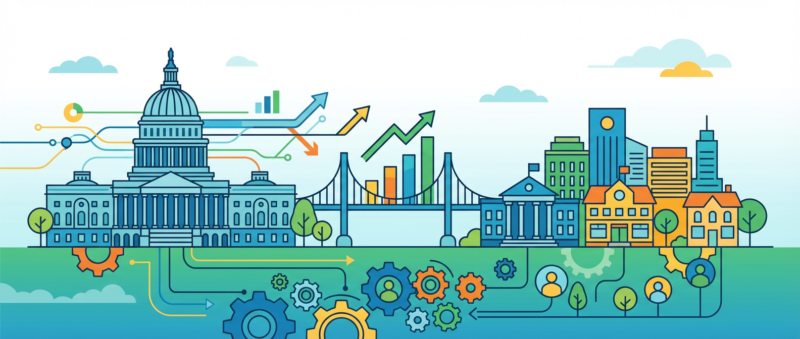
The Deceptive Simplicity of State-Local Relations
When your city council debates whether to allow backyard chickens or your school board considers a new math curriculum, you might assume these decisions rest entirely with local officials. This assumption, while understandable, misses a fundamental shift happening across American governance. State legislatures have been steadily recalibrating the balance between state authority and local autonomy, often in ways that directly affect your property taxes, your children’s education, and even what businesses can operate in your neighborhood.
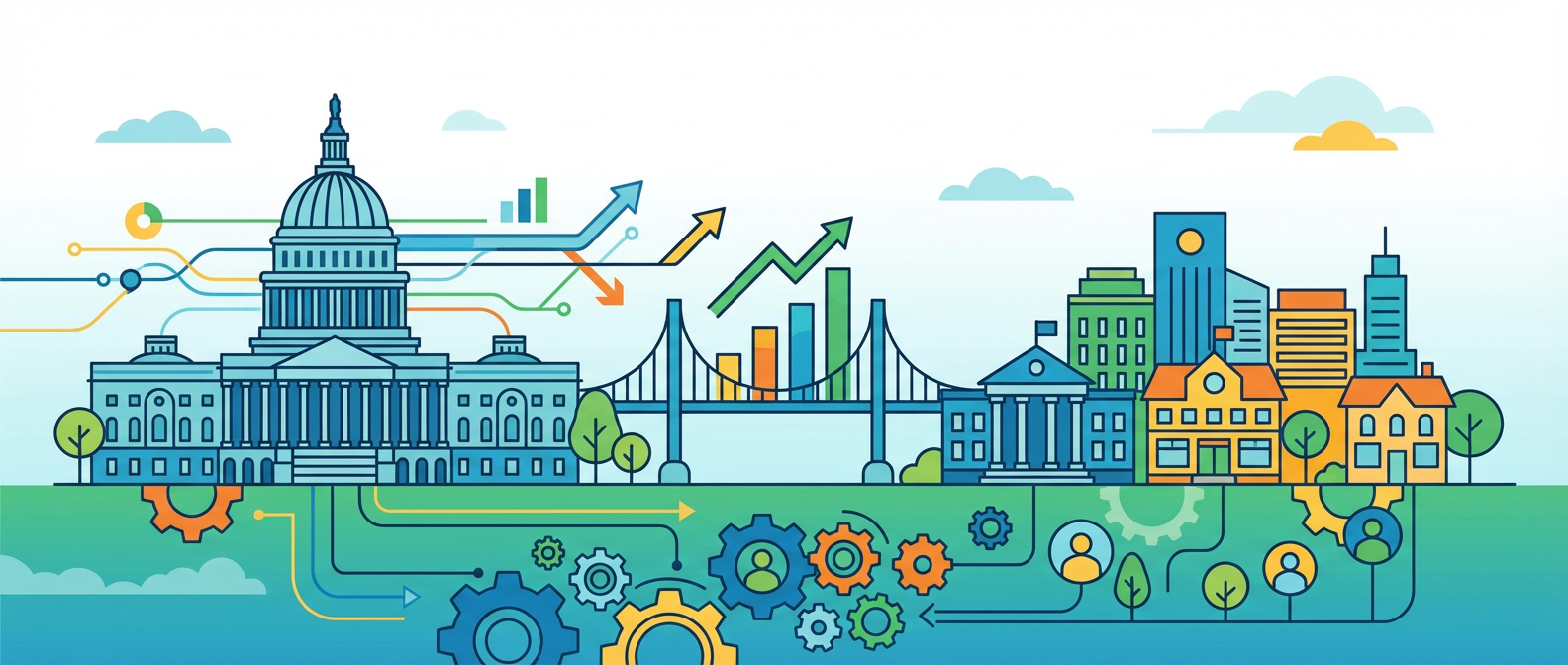
The relationship between state and local government operates through what scholars call “Dillon’s Rule,” established in an 1868 court case. This principle declared local governments have only the powers explicitly granted by their state. Every zoning ordinance, every local tax, and every municipal service exists only because the state allows it. Some states grant broad home rule powers to their localities. Others maintain tight control through detailed laws that dictate everything from budget processes to personnel policies.
What makes this particularly tricky is that these power dynamics rarely announce themselves with fanfare. Instead, they show up through seemingly boring legislative sessions where lawmakers adjust municipal finance formulas, modify zoning authorities, or alter public safety protocols. A single line item in a state budget can determine whether your town can afford to keep its library open or whether your county has the legal authority to regulate short-term rentals in residential neighborhoods.

The Preemption Wave: When States Say No to Local Innovation
Across the country, state legislatures have embraced preemption laws that explicitly prohibit local governments from enacting certain types of policies. Texas has banned local governments from regulating oil and gas operations. Florida has blocked local gun regulations and minimum wage ordinances. North Carolina famously preempted Charlotte’s anti-discrimination ordinance, leading to the controversial “bathroom bill” and subsequent economic boycotts.
These preemption laws reflect competing philosophies about governance and democracy. Supporters argue they create statewide consistency, prevent a patchwork of conflicting regulations that burden businesses, and protect individual rights from potentially overzealous local majorities. Critics contend they undermine democratic responsiveness and prevent communities from addressing local problems with locally appropriate solutions.
The practical impact depends heavily on your community’s particular circumstances. Live in a university town that wants to raise the minimum wage for municipal employees? State preemption might prevent that policy entirely. Own a small business that operates across multiple counties? Preemption might eliminate the compliance headache of navigating different local regulations. The same law that protects one citizen’s interests may constrain another’s democratic participation.
The Revenue Revolution: How State Decisions Shape Local Budgets
Perhaps nowhere is the state-local relationship more consequential than in municipal finance. State decisions about tax authority, revenue sharing, and spending mandates directly determine what services your local government can provide. Consider property tax caps, which more than a dozen states have imposed on local governments over the past two decades. These limits might keep your property tax bill lower, but they also prevent your town from funding road maintenance, expanding park programs, or hiring additional police officers.
State revenue-sharing formulas create another layer of complexity that most residents never see but experience daily. When your state distributes gas tax revenue to localities for road repairs, the formula determines whether your neighborhood streets get repaved this year or next decade. When education funding formulas change, they affect class sizes, teacher retention, and program offerings in ways that parents notice immediately but rarely trace back to state legislative decisions.
The recent pandemic highlighted these connections dramatically. Local governments that depended heavily on sales tax revenue saw budgets collapse when businesses closed. Those with more diversified revenue streams weathered the crisis better. State decisions about emergency aid distribution, tax deadline extensions, and budget flexibility requirements determined which communities could maintain essential services and which faced difficult cuts to public safety, infrastructure, and social programs.
The Unfunded Mandate Challenge: When States Require but Don’t Fund
State governments regularly require local governments to implement new policies or meet new standards without providing the corresponding funding. Public administration scholars call these unfunded mandates. These requirements force local officials into impossible positions: either raise local taxes to fund state-required programs, cut other services to reallocate existing resources, or risk legal penalties for non-compliance.
Environmental regulations provide clear examples of this dynamic. When states adopt new water quality standards or waste management requirements, local utilities and public works departments must upgrade infrastructure and expand monitoring programs. These improvements benefit public health and environmental quality, but they also increase operational costs that local ratepayers ultimately fund through higher utility bills and tax assessments.
Public safety mandates create similar pressures. State requirements for emergency response capabilities, jail standards, or police training programs have important public benefits, but they require local governments to hire additional staff, purchase new equipment, and expand facilities. Small towns and rural counties often struggle most with these requirements because they lack the economies of scale that help larger jurisdictions manage compliance costs.
Looking Forward: The Emerging Patterns That Will Shape Your Community
Several trends are reshaping state-local relations in ways that will affect communities nationwide over the coming decade. Climate change adaptation is driving new state requirements for local planning and infrastructure investment. Demographic shifts are forcing states to reconsider how they distribute resources between growing suburban areas and declining rural regions. Technology adoption creates new regulatory challenges around data privacy, digital service delivery, and cybersecurity that require coordination between state and local authorities.
The housing crisis is pushing states to override local zoning restrictions that limit density and affordability. Concerns about economic competitiveness are leading some states to block local business regulations that might discourage investment. These competing pressures reflect fundamental tensions between local democratic control and broader policy effectiveness that democratic societies have grappled with for centuries.
What makes this moment particularly important is that many of these changes are happening quietly, through technical legislative language and administrative rule changes that receive little public attention. They have significant practical impact though. Your community’s future capacity to address local challenges depends partly on understanding these dynamics and engaging with state-level decisions that might seem remote but affect local outcomes directly.
The relationship between state authority and local autonomy will continue evolving as communities face new challenges and opportunities. Whether you’re concerned about housing costs, educational quality, environmental protection, or economic development, understanding how state decisions shape local possibilities can help you engage more effectively in the democratic processes that determine your community’s future.