The Historical Echo: When Great Powers Compete Through Local Proxies
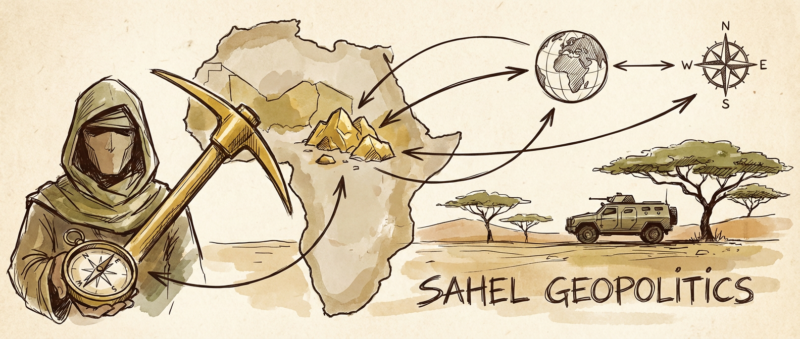
The sight of Russian military contractors securing gold mines in Mali might feel like a distinctly 21st-century development, but it carries unmistakable echoes of earlier great power competitions on the African continent. Much like the Berlin Conference of 1884 carved up Africa among European powers based on resource extraction potential, today’s geopolitical realignment in the Sahel follows similar patterns of external powers using security partnerships to secure economic concessions. The key difference lies not in the fundamental dynamic, but in the actors and methods involved.

As of March 2026, Russian military contractors operating under various successor organizations to the Wagner Group have established footholds in eight African nations, with Mali as their most substantial operational base. This expansion is more than simple military adventurism. It reflects a calculated strategy to fill the vacuum left by Western withdrawal while securing access to critical mineral resources. The Malian government’s decision to grant exclusive mining rights to Russian-backed firms for three major gold deposits, valued at approximately $2.4 billion according to Africa Mining Intelligence Analysis, demonstrates how security partnerships can quickly transform into resource extraction agreements.
Yet the historical parallel has its limits. Unlike the colonial scramble, which involved direct territorial control and formal administrative structures, Russia’s approach operates through what we might call “sovereignty arbitrage.” Moscow provides security services to governments that Western powers increasingly view as illegitimate, in exchange for economic concessions that would be politically impossible under traditional aid relationships. This creates a different dynamic than straightforward colonial extraction, even as the fundamental resource-for-security exchange remains remarkably similar.
The French Withdrawal and the Security Vacuum
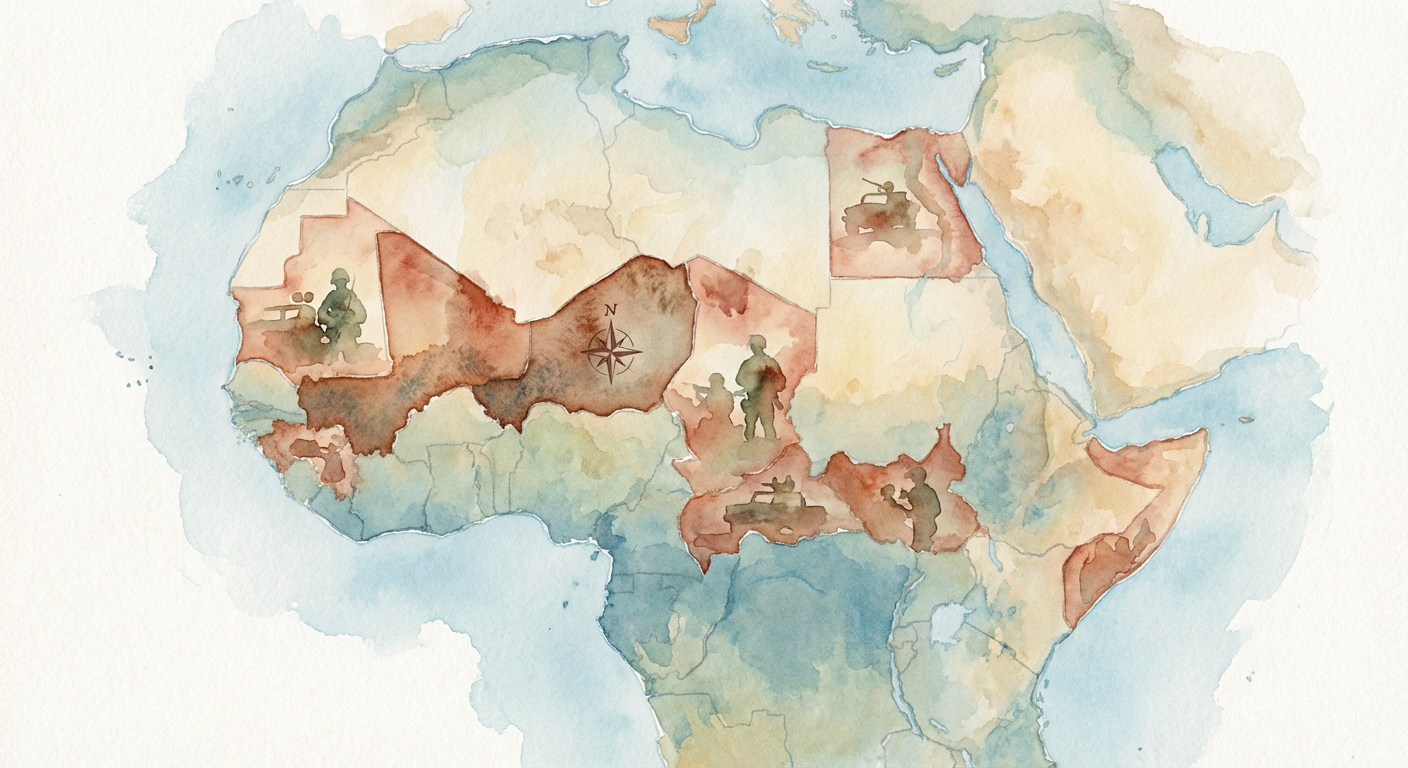
Understanding Russia’s current position requires examining the void it filled. France’s Operation Barkhane, which concluded its 13-year presence in the Sahel in December 2025, was the last vestige of traditional post-colonial security arrangements in the region. French forces had initially intervened to combat jihadist groups threatening to overrun Mali’s government, but over time, their presence became increasingly unpopular among local populations who viewed it as a continuation of colonial domination rather than genuine partnership.
The timing of the French withdrawal created a critical inflection point. Malian authorities, already estranged from their former colonial patron, found themselves facing continued security threats without the military capacity to address them independently. Russian contractors offered an appealing alternative: security services without the political baggage of colonial history, and without the governance conditions typically attached to Western military aid. This arrangement allowed Malian leadership to maintain sovereignty claims while accessing external military support.
However, the transition has come with significant humanitarian costs. The UN Security Council Mali Report documented a 45% increase in civilian casualties in northern Mali following the shift to Russian security partnerships. This suggests that while Russian contractors may have filled the immediate security vacuum, their operational methods and priorities differ substantially from previous peacekeeping approaches, often prioritizing resource protection over civilian safety.
Regional Isolation and the ECOWAS Response
The broader regional response to Mali’s pivot illustrates how resource-driven security partnerships can fundamentally alter diplomatic relationships. In January 2026, the Economic Community of West African States suspended Mali, along with Burkina Faso and Niger, citing governance concerns and Russian military cooperation as primary factors. This unprecedented move effectively isolated three nations from West Africa’s primary economic and political integration mechanism.
ECOWAS’s decision reflects deeper concerns about the precedent being set. If military coups followed by Russian security partnerships can provide sustainable governance models, it potentially undermines the regional consensus around democratic transitions and constitutional order. The organization’s leadership recognized that allowing Mali’s approach to succeed without consequences could encourage similar arrangements elsewhere in the region.
Yet the suspension also reveals the limited leverage that regional organizations possess when member states can access alternative security and economic partnerships. Mali’s government has shown little inclination to reverse course, suggesting that Russian support provides sufficient compensation for regional isolation. This dynamic challenges traditional assumptions about the importance of regional integration in African political economy.
The Gold Rush: Economics Driving Geopolitics
The economic fundamentals underlying Mali’s Russian partnership deserve careful examination because they explain the sustainability of current arrangements. Mali has some of Africa’s richest gold deposits, and gold mining is the country’s largest export sector. By securing exclusive rights to major deposits, Russian-backed firms have positioned themselves to benefit from sustained global demand for precious metals, particularly as economic uncertainties drive investors toward hard assets.
This resource-for-security exchange creates powerful incentives for both sides to maintain their partnership despite international pressure. Russian contractors receive not just payment for their services, but equity stakes in long-term resource extraction. Malian authorities gain both immediate security support and ongoing revenue streams from mining operations. Unlike traditional aid relationships, which require periodic renegotiation and often come with shifting political conditions, resource extraction partnerships create durable economic foundations for continued cooperation.
The broader implications extend beyond bilateral arrangements. Other resource-rich African nations facing similar security challenges may view Mali’s model as an attractive alternative to traditional Western partnerships. This could accelerate the fragmentation of Africa’s post-colonial political order, as different regions align with competing global powers based on their specific resource endowments and security needs.
Implications for Sahel Stability and Global Order
The transformation of Mali into a Russian sphere of influence through gold-backed security partnerships is more than a localized shift in great power competition. It demonstrates how resource extraction can provide the foundation for alternative governance models that explicitly reject Western political and economic frameworks. This development challenges fundamental assumptions about post-Cold War African political development.
Looking forward, the sustainability of Russia’s Sahel strategy will likely depend on its ability to provide genuine security improvements while maintaining profitable resource extraction. If civilian casualties continue to rise while Russian-backed firms extract significant wealth, local populations may eventually turn against current arrangements regardless of their governments’ preferences. Alternatively, if Russian contractors prove more effective at providing security than previous interventions, their model could attract additional African partners.
The Mali case study offers crucial insights into how 21st-century great power competition operates through hybrid arrangements that combine security services, resource extraction, and sovereignty claims in ways that defy traditional categories of analysis. Whether this is a temporary aberration or a new template for international relations in resource-rich regions remains an open question that will likely shape African political development for years to come. What aspects of this dynamic do you find most significant for understanding contemporary geopolitical realignments?