Author: Danielle Watson

Why Your City Council Race Matters More for Healthcare Than You Think

The Hidden Healthcare Powers of Local Government

When we think about healthcare policy, our minds naturally drift to Washington’s grand debates over Medicare expansion or pharmaceutical pricing. Yet some of the most important healthcare decisions affecting your daily life happen in the least glamorous venues imaginable: city council chambers, county commissioner meetings, and local zoning hearings. This isn’t hyperbole or an attempt to blow up the importance of local politics. It reflects how healthcare delivery actually works in America’s fragmented system.

Why Your City Council Race Matters More for Healthcare Than You Think

Consider something as basic as where you can access healthcare. Your city’s zoning ordinances determine whether an urgent care clinic can open in that vacant strip mall near your neighborhood. County health departments decide which pharmacies can dispense controlled substances and where needle exchange programs operate. Local licensing boards control which healthcare professionals can practice in your area and under what conditions. These decisions create the physical and regulatory infrastructure that determines whether healthcare is accessible, affordable, and appropriate for your community’s specific needs.

Things get complicated when you look at how local governments work with state and federal programs. Medicaid expansion might be a state-level decision, but counties often determine how those benefits get handled locally. Federal housing vouchers include healthcare accessibility requirements, but municipalities decide where affordable housing gets built. Even something as straightforward as public transportation funding affects healthcare outcomes, since reliable transit access often determines whether low-income residents can maintain consistent relationships with healthcare providers.

Illustration for Why Your City Council Race Matters More for Healthcare Than You Think

Zoning Laws as Healthcare Policy

Let’s look at a concrete example of how local decision-making shapes healthcare access. In 2019, the city of Richardson, Texas faced what seemed like a routine zoning decision about allowing a methadone clinic in a light industrial district. The planning commission’s initial analysis focused on typical concerns: traffic patterns, building codes, and compatibility with surrounding businesses. Yet this zoning decision would ultimately determine whether residents struggling with opioid addiction could access evidence-based treatment within a reasonable distance of their homes and workplaces.

The complications piled up quickly. Federal regulations require methadone clinics to meet strict security and operational standards, but local zoning laws control where such facilities can locate. State licensing determines what services they can offer, but local permitting processes affect their viability. The Richardson case shows how healthcare policy gets made through seemingly mundane administrative processes, where planning commissioners with no medical training make decisions that directly affect treatment outcomes for addiction, a condition with mortality rates comparable to many cancers.

Richardson’s ultimate approval came with conditions that required more security measures and community engagement protocols. These local modifications didn’t just affect one clinic’s operations. They set precedents for how similar facilities would be regulated throughout the Dallas metropolitan area, basically creating regional healthcare policy through local administrative action. Similar dynamics play out nationwide as communities grapple with where to locate mental health facilities, abortion clinics, dialysis centers, and other specialized healthcare services that trigger local political tensions.

Public Health Infrastructure and Local Capacity

The COVID-19 pandemic revealed stark differences in local public health capacity that had been developing over decades through local budget decisions. Counties with robust health departments, like those in King County, Washington, could quickly implement contact tracing, coordinate with healthcare systems, and communicate effectively with residents. Meanwhile, counties that had spent years cutting public health funding found themselves scrambling to build basic outbreak response capacity during a crisis.

These capacity differences weren’t accidental. They resulted from thousands of local budget decisions, personnel policies, and strategic priorities set by elected officials who rarely campaigned on public health platforms. Commissioners who focused on tax cuts over health department staffing didn’t expect that their fiscal conservatism would later translate into higher hospitalization rates and more business disruptions during a pandemic. Communities that maintained strong public health infrastructure, even during good times, found themselves better positioned to protect both health and economic outcomes when crisis hit.

The implications go way beyond pandemic response. Local health departments monitor food safety, investigate disease outbreaks, provide maternal and child health services, and coordinate emergency medical responses. A county that eliminates its environmental health inspector might save $80,000 annually in salary and benefits. But that same county may later face restaurant-related illness outbreaks that cost local businesses hundreds of thousands in lost revenue and create lasting reputational damage that affects the entire local economy.

Healthcare Workforce and Local Economic Development

Local economic development strategies increasingly recognize healthcare as both a major employer and a factor in attracting other businesses. Communities competing for manufacturing plants or corporate relocations know that executives evaluate local healthcare quality when making site selection decisions. This creates interesting situations where chambers of commerce find themselves advocating for policies that support healthcare workforce development and facility improvements.

Consider how Chattanooga, Tennessee approached this challenge. Rather than simply recruiting healthcare businesses, the city invested in healthcare workforce training programs through its community college system, provided tax incentives for medical facility improvements, and coordinated with regional hospital systems to ensure adequate specialist coverage. These efforts required collaboration between municipal governments, county commissions, school boards, and economic development authorities. The result was a healthcare ecosystem that could support both community health needs and broader economic development goals.

The workforce dimension creates particularly tricky policy challenges. Local communities want to retain young healthcare professionals, but they often lack the amenities, cultural opportunities, or professional networks that attract recent graduates. Rural communities face especially tough challenges, where a single departing physician can eliminate entire service lines. Local policies around housing costs, recreational opportunities, spousal employment, and professional development can all influence healthcare workforce retention, yet these connections rarely get explicit attention in local political campaigns.

Making Local Healthcare Politics More Visible

The invisibility of local healthcare policymaking creates accountability gaps that affect everyone. Voters who carefully research candidates’ positions on national healthcare issues often have no idea where local candidates stand on zoning policies that affect clinic access, budget priorities that determine public health capacity, or economic development strategies that influence healthcare workforce retention.

This information gap isn’t inevitable. Local newspapers and civic organizations can make these connections more visible by covering healthcare implications of routine local government decisions. Candidate forums can include questions about local healthcare priorities. Budget discussions can explicitly address public health implications of spending decisions. The challenge isn’t that local officials are hiding their healthcare-related decision-making, it’s that the connections between local governance and healthcare outcomes remain largely hidden.

Understanding these connections doesn’t mean abandoning interest in state and federal healthcare policy. Instead, it means recognizing that healthcare policy happens simultaneously at multiple levels of government, with local decisions often determining how higher-level policies actually affect individual communities. Your next city council vote might have more immediate impact on your family’s healthcare access than your congressional choice.

What healthcare challenges do you see in your own community that might connect to local government decisions? I’d be interested in your observations about how local politics shapes healthcare access where you live, and whether these connections get adequate attention in your local political conversations.

Why Your Local Climate Policy Matters More Than Federal Headlines

The Multilayered Reality of Climate Governance

When most people think about climate policy, they picture international summits, federal legislation, or sweeping executive orders. This focus on high-level governance makes sense given the global nature of the climate challenge, but it misses a fundamental truth about how environmental policy actually works in practice. The most consequential climate decisions often happen not in Washington or at COP conferences, but in city halls, county planning commissions, and state utility regulatory boards.

Why Your Local Climate Policy Matters More Than Federal Headlines

Consider what happens when a state sets a renewable portfolio standard requiring utilities to source 50% of their electricity from clean sources by 2030. That mandate doesn’t implement itself. Local utility companies must decide which projects to prioritize, where to site new infrastructure, and how to manage grid stability during the transition. Municipal governments become key players in permitting processes for solar installations and wind farms. County boards weigh in on transmission line routes that will carry renewable energy across their jurisdictions.

This multilayered implementation process creates what political scientists call “policy feedback loops.” Local decisions shape how effectively state and federal policies achieve their intended outcomes, while those broader policies create new incentives and constraints for local actors. Understanding these dynamics is essential for anyone who wants to grasp why some communities transition quickly to clean energy while others lag behind, even when operating under identical state or federal mandates.

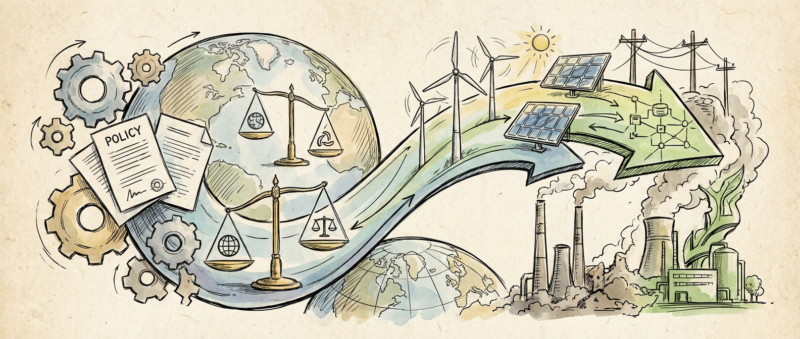
Illustration for Why Your Local Climate Policy Matters More Than Federal Headlines

Where Federal Policy Meets Local Infrastructure

The Inflation Reduction Act allocated hundreds of billions in federal climate investments, but the actual deployment of these resources depends entirely on local capacity and decision-making. Take the electric vehicle charging infrastructure provisions. Federal dollars can fund charging stations, but municipalities must navigate zoning requirements, electrical grid upgrades, and coordination with private developers to make installations happen.

In practice, this means that a wealthy suburb with an experienced planning department and updated electrical infrastructure can rapidly deploy EV charging networks, while a rural county with limited administrative capacity might struggle to access the same federal funding. The gap isn’t just about money. It’s about institutional knowledge, regulatory frameworks, and local political dynamics that determine whether federal climate investments translate into real-world infrastructure changes.

These implementation challenges reveal why climate policy effectiveness varies so dramatically across different communities. Federal frameworks provide resources and requirements, but they cannot override local institutional constraints or political resistance. A city council skeptical of renewable energy can slow permitting processes. A county with outdated zoning codes might inadvertently block solar development. A utility company focused on short-term costs might choose less effective but politically safer compliance strategies.

The Hidden Power of Local Energy Decisions

Local governments control more energy policy than most people realize. They set building codes, zoning regulations, and municipal utility operations. When a city updates its building code to require electric heat pumps in new construction, that decision shapes energy demand patterns for decades. When a county restricts solar installations in certain zones, it directly limits renewable energy deployment regardless of federal incentives.

These local decisions add up to system-wide impacts that can either accelerate or undermine broader climate goals. California’s experience shows this dynamic clearly. The state’s aggressive renewable energy targets succeeded partly because local governments embraced supportive zoning policies and streamlined permitting processes. Communities that made solar installations easier to permit saw rapid deployment, while those that maintained bureaucratic obstacles lagged behind.

Municipal utilities represent another leverage point often overlooked in climate policy discussions. Unlike investor-owned utilities regulated by state commissions, municipal utilities answer directly to local elected officials and community priorities. This structure can enable faster clean energy transitions when local leaders prioritize climate goals, but it can also create pockets of resistance in communities skeptical of renewable energy investments.

Economic Development Through Energy Transition

Local climate policy decisions increasingly function as economic development strategies, creating new industries and job opportunities while determining which communities benefit from the clean energy economy. When a rural county embraces wind energy development, it doesn’t just reduce carbon emissions. It generates property tax revenue, creates construction jobs, and provides ongoing lease payments to landowners that can sustain local businesses and schools.

The economic development dimension explains why some traditionally conservative communities have become renewable energy champions despite skepticism about climate science. West Texas, hardly a bastion of environmental activism, leads the nation in wind energy production because local officials recognized the economic opportunities. Property tax revenue from wind farms has funded new schools and infrastructure improvements in communities that struggled economically for decades.

These economic incentives create political coalitions that go beyond traditional environmental advocacy. Farmers earning lease payments from solar installations become clean energy supporters. Construction workers building wind farms develop stakes in renewable energy policies. Local banks financing energy efficiency retrofits gain interests in continued climate investments. Understanding these economic dynamics helps explain why some climate policies gain traction while others face sustained opposition.

Building Capacity for Local Climate Action

Effective climate policy requires institutional capacity that many local governments currently lack. Small towns may not employ staff familiar with renewable energy regulations. Counties might lack the technical expertise to evaluate solar development proposals. Municipal utilities often need support to navigate complex grid integration challenges as renewable energy percentages increase.

Addressing these capacity constraints requires targeted investments in local government capabilities, professional development programs, and cooperation frameworks between jurisdictions. State governments increasingly recognize this need, creating technical assistance programs and regional coordination mechanisms to help local governments navigate energy transition challenges. The most successful climate policies combine federal funding, state regulatory frameworks, and local implementation support.

The path forward requires acknowledging that climate policy effectiveness depends as much on local institutional capacity as on federal ambition. Sustainable energy transitions happen through thousands of local decisions made by planning commissioners, utility managers, and elected officials who may never think of themselves as climate policy makers. Strengthening these local institutions and decision-making processes is one of the most practical ways to accelerate progress on climate goals.

What climate policy challenges and opportunities do you see in your own community? The intersection of federal frameworks and local implementation creates different dynamics in different places, and those variations often reveal the most promising strategies for accelerating clean energy transitions.

Why House Rules Committee Hearings Tell Us More About American Democracy Than Floor Votes

The Theater of Constraints

Last Tuesday, the House Rules Committee spent forty-seven minutes debating whether to allow a single amendment to a defense appropriations bill. The amendment itself would have redirected $2.3 million from one Pentagon office to another. By any reasonable measure, this was legislative minutiae. Yet the hearing room was packed with staffers, lobbyists, and reporters who understood something most Americans miss: the Rules Committee doesn’t just manage procedure, it decides which version of democracy we actually get to practice.

This scene plays out dozens of times each session, yet congressional committees remain perhaps the most misunderstood institutions in American government. We focus on floor votes and presidential signatures, but the real legislative action happens in rooms most citizens never see. The committee system doesn’t just process legislation—it shapes what kinds of policies are even possible to consider in the first place.

Understanding committee dynamics means wrestling with a contradiction that political scientists have debated for decades: these institutions make democratic deliberation possible while also constraining it. They allow complex governance to function while creating chokepoints that can kill popular proposals. This tension isn’t a bug—it’s the main feature of how Congress actually works.

The Gatekeeping Function Beyond Simple Obstruction

Committee chairs have power that goes far beyond their official authority to schedule hearings and markup sessions. When Energy and Commerce Committee Chair Cathy McMorris Rodgers decided in 2023 to focus on data privacy legislation over climate regulations, she wasn’t just setting an agenda. She was deciding which expert voices would be heard, which interest groups would get access, and which problems Congress would treat as urgent. This gatekeeping happens through mechanisms most observers never notice: the timing of witness lists, how hearing topics get framed, even the physical layout of committee rooms.

The real leverage comes from information gaps. Committee members develop expertise that gives them outsized influence over their colleagues. When Senator Sherrod Brown speaks about banking regulation or Representative Rosa DeLauro weighs in on food safety, they’re not just offering opinions. They’re providing shortcuts for dozens of other members who lack the time or background to evaluate complex technical details independently. This specialization makes legislative efficiency possible, but it also means that committee composition becomes a form of structural power that rarely makes headlines.

Look at how the Senate Judiciary Committee handles Supreme Court nominations. The committee doesn’t just recommend confirmation or rejection—it shapes public understanding of what judicial philosophy means, which legal precedents matter, and how we should evaluate judicial temperament. The questions senators ask reveal their constitutional priorities, and those priorities become part of the national conversation about the role of courts in American democracy.

Jurisdictional Battles as Constitutional Interpretation

The most telling moments in congressional committee work often happen when multiple committees claim jurisdiction over the same issue. When artificial intelligence regulation emerged as a policy priority, no fewer than six House committees and four Senate committees claimed some oversight authority. These weren’t just bureaucratic turf wars—they were fundamental disagreements about how to fit new forms of technological power into existing constitutional frameworks.

The House Energy and Commerce Committee approached AI as a consumer protection issue, focusing on algorithmic bias and data privacy. The Armed Services Committee saw it through the lens of national security and military applications. The Financial Services Committee worried about algorithmic trading and systemic risk. Each perspective was legitimate, but each would have produced dramatically different regulatory approaches. The eventual resolution—splitting oversight responsibilities among multiple committees—reflected not compromise but recognition that AI doesn’t fit neatly into nineteenth-century jurisdictional categories.

These jurisdictional disputes reveal something deeper about American governance: our committee system embeds particular assumptions about how social problems should be categorized and addressed. When we assign healthcare policy to one committee and immigration policy to another, we’re making implicit claims about whether those issues are separate or interconnected. The recent debate over mental health parity legislation shows this clearly—should such policies be handled by health committees, financial services panels with insurance expertise, or judiciary committees that understand constitutional questions about federal versus state authority?

The Markup Process as Democratic Microcosm

Committee markups are democracy’s messiest and most authentic moments. Unlike hearings, which often feel like scripted theater, markups force members to negotiate real tradeoffs under genuine time pressure. During the 2023 markup of the National Defense Authorization Act, the House Armed Services Committee considered 142 amendments over thirteen hours. Members had to make rapid-fire decisions about everything from military housing allowances to weapons procurement timelines, often with incomplete information and competing constituency pressures.

The amendment process reveals how legislative coalitions actually form and dissolve. Progressive Democrats found themselves voting alongside conservative Republicans on amendments limiting surveillance authorities, while defense hawks from both parties united against proposals to reduce overseas military presence. These cross-cutting alliances don’t emerge from abstract ideological positions—they develop through the practical work of writing specific legislative language that can attract 218 votes in the House and 60 in the Senate.

What makes markups particularly revealing is their transparency requirements. Unlike floor votes, where members can often hide behind procedural complexity, committee votes create clear records of who supported which specific provisions. When Representative Adam Smith voted against an amendment expanding Pentagon audit requirements, his defense industry donors noticed. When Representative Elise Stefanik supported stricter oversight of military contractors, her progressive critics took note. These votes become part of the political record in ways that shape future primary challenges and general election campaigns.

Beyond Partisan Theater: Where Expertise Still Matters

Despite increasing polarization, committee work still provides spaces where expertise can beat partisan talking points. The House Science, Space, and Technology Committee’s 2024 hearings on quantum computing had genuine bipartisan curiosity about technical challenges and economic opportunities. Members asked detailed questions about error rates, manufacturing costs, and international competition that revealed actual engagement with complex subject matter rather than simple position-taking.

This expertise-driven discussion happens most often in committees that deal with technical issues where partisan frames don’t easily apply. The House Transportation and Infrastructure Committee’s work on bridge safety standards or the Senate Environment and Public Works Committee’s discussions of water treatment technologies create opportunities for members to focus on practical problem-solving rather than political positioning.

The challenge is that these moments of genuine discussion occur alongside more theatrical exercises designed primarily for media consumption. Telling the difference between serious policy development and political performance requires understanding the subtle cues that indicate when committee members are actually trying to solve problems versus when they’re simply trying to generate quotable soundbites for fundraising emails.

Congressional committees embody the fundamental tensions in American democracy between efficiency and representation, expertise and accountability, discussion and decisive action. Rather than resolving these tensions, they manage them through institutional processes that most citizens never observe directly. Understanding how these institutions actually function—not how they’re supposed to function in civics textbooks—remains essential for anyone who wants to understand how American democracy works in practice. The question isn’t whether committee dynamics serve democracy well, but whether we’re paying sufficient attention to the places where our democracy actually happens.

How Congressional Committee Dynamics Shape Your Local Reality: The Hidden Machinery of Federal Power

The Committee System: Where National Policy Meets Neighborhood Impact

When your city council debates whether to accept federal transportation grants, or when your local hospital struggles with Medicare reimbursement rates, or when your school district navigates federal education mandates, you’re seeing the results of decisions made in congressional committee rooms hundreds of miles away. These committees are the workshops where federal policy gets built, tweaked, and packaged for votes that decide how billions of dollars flow to communities like yours.

How Congressional Committee Dynamics Shape Your Local Reality: The Hidden Machinery of Federal Power

The committee system is one of Congress’s most powerful yet misunderstood parts. Unlike the dramatic floor votes that make headlines, committees work like specialized labs where governance actually happens. Each committee builds expertise in specific areas, from agriculture to veterans affairs. Their internal politics directly affect whether your community gets infrastructure funding, disaster relief, or regulatory support for local businesses.

Here’s what many people miss: committees aren’t neutral policy workshops. They reflect power structures, regional interests, and partisan calculations that decide which communities benefit from federal programs and which get ignored. The makeup of the House Transportation and Infrastructure Committee directly affects whether rural bridges get repaired or urban transit systems get modernization funds.

Illustration for How Congressional Committee Dynamics Shape Your Local Reality: The Hidden Machinery of Federal Power

Seniority, Geography, and the Art of Local Advocacy

Committee assignments follow patterns that show how federal power really works. Senior members from safe districts often chair committees for decades, building up institutional knowledge and relationships that newer members can’t match. This creates a system where certain regions maintain huge influence over policy areas that matter to their local economies. A representative from farm country who chairs the Agriculture Committee can reshape crop insurance programs affecting farmers nationwide. A coastal member leading the Natural Resources Committee influences offshore drilling policies that impact both environmental protection and energy jobs.

The seniority system creates fascinating dynamics around local priorities. When a long-serving member represents your district, their committee positions can mean major advantages for local projects. Defense contractors don’t locate facilities in districts with Armed Services Committee members by accident, they do it because those relationships help secure ongoing federal contracts. Districts represented by Appropriations Committee members often see federal facilities and projects that provide stable jobs and economic development.

How committee seats get distributed geographically reflects ongoing negotiations between parties and regions. Rural states fight to maintain spots on agriculture committees, while coastal districts want seats on maritime and fisheries panels. These arrangements matter because committee members develop specialized knowledge of federal programs that can help their home districts, and they build relationships with agency officials who actually run those programs locally.

The Markup Process: Where Local Interests Get Written Into Law

The committee markup process is democracy at its most detailed level. General policy concepts get transformed into specific legislative language that determines how federal programs actually work in practice. During markups, members propose amendments that can redirect funding, modify eligibility requirements, or create new programs addressing particular local needs. These sessions get less public attention than floor votes, but they’re often more important for communities trying to access federal resources.

Successful local advocacy often depends on understanding markup timing and procedures. When the House Energy and Commerce Committee marks up healthcare legislation, members might propose amendments addressing rural hospital funding, telemedicine access, or specialized treatment programs. These amendments can create new opportunities for local healthcare systems or kill existing funding streams, depending on whether they survive the markup process and eventual floor votes.

The amendment process also shows how local knowledge influences federal policy. Representatives bring district-specific examples to markup sessions, arguing that their communities illustrate broader national challenges needing federal attention. A member might use their local port’s infrastructure needs to justify broader harbor maintenance funding, or highlight their district’s broadband gaps to support rural internet expansion programs. These local examples often work better than abstract policy arguments.

Oversight Functions: Holding Agencies Accountable to Local Communities

Congressional oversight is one of the most direct ways committee dynamics affect local outcomes, yet it gets far less attention than legislative activities. Committees regularly drag agency officials in to explain how federal programs are being implemented. These sessions can produce significant changes in how agencies interpret their mandates and allocate resources. When the House Veterans Affairs Committee questions VA officials about wait times at specific medical centers, those inquiries often lead to management changes and resource shifts that directly impact veterans in affected communities.

Oversight hearings also let members highlight local implementation problems and demand solutions. A representative might use a committee hearing to grill EPA officials about delayed environmental cleanup projects in their district, or to press Education Department officials about special education funding shortfalls affecting local schools. These public confrontations often produce quicker results than legislation, as agencies work to avoid continued congressional criticism.

How effective oversight is depends heavily on committee leadership and staff expertise. Committees with experienced staff who understand both policy details and agency operations can ask better questions and follow up more effectively on agency responses. This institutional capacity varies significantly between committees and can determine whether oversight translates into real improvements for affected communities.

Looking Beyond the Headlines: What This Means for Civic Engagement

The complexity of committee dynamics suggests that effective civic engagement requires more than following floor votes and major legislative battles. Understanding which committees handle issues affecting your community, who represents your interests on those panels, and when key markup sessions occur can significantly improve your ability to influence federal policy outcomes. Local organizations often succeed more by timing their advocacy around committee activities rather than waiting for floor consideration of major legislation.

Committee staff members also represent crucial but underutilized resources for local engagement. These professionals often have deep knowledge of federal programs and can provide guidance on application processes, eligibility requirements, and timing considerations that determine whether local projects receive federal support. Building relationships with relevant committee staff can prove more valuable than occasional contacts with elected officials.

The federal budget process, which flows through multiple committee jurisdictions, offers annual opportunities for communities to advocate for specific funding priorities. Understanding how authorization and appropriation processes work separately can help local advocates target their efforts more effectively and avoid common timing mistakes that reduce their influence.

What specific federal programs or policies would you like to understand better in terms of their committee origins and local implementation? The intersection of congressional procedure and community impact offers endless opportunities for deeper exploration, and your questions help identify which aspects of this complex system deserve additional attention.

Why Congressional Committees Are Democracy’s Most Underappreciated Workhorse

The Paradox of Invisible Power

Congressional committees exist in this weird space that says a lot about how American democracy really works compared to what we think it should look like. These committees have massive influence over policy, but most of us barely know they exist until something dramatic happens or a scandal breaks. I bet you can name your House rep and senators, but could you tell me which committees are writing the laws that actually affect your life? This invisibility isn’t some accident. It’s baked into a system that tries to balance democratic accountability with the messy reality that governing requires specialized knowledge.

Why Congressional Committees Are Democracy's Most Underappreciated Workhorse
Why Congressional Committees Are Democracy’s Most Underappreciated Workhorse

Here’s where it gets tricky. Committees are trying to serve two masters with totally different demands. They need to respond to what voters want, which drives democratic legitimacy. But they also have to wrestle with technical complexities that require deep, sustained attention that electoral cycles don’t reward. Take a committee looking at financial regulation. They’re dealing with populist anger about banking practices while also navigating the complicated realities of global capital markets that don’t have simple fixes.

This explains why committee work looks painfully slow and incremental to anyone watching from the outside. What seems like bureaucratic foot-dragging is actually democracy trying to reconcile competing values: being responsive versus having expertise, transparency versus getting things done, broad representation versus specialized knowledge. You need to understand this tension to figure out whether committees actually serve democracy well or just get in the way of responsive government.

Illustration for Why Congressional Committees Are Democracy's Most Underappreciated Workhorse
Illustration for Why Congressional Committees Are Democracy’s Most Underappreciated Workhorse

The Architecture of Influence

How committees are structured reflects deeper questions about how democratic institutions should organize knowledge and power. The seniority system gets criticized as undemocratic all the time, but it actually does important things beyond just rewarding people for sticking around. Senior members don’t just know procedures better. They have relationships across party lines and institutional memory about what’s been tried before. When a junior member proposes legislation that failed spectacularly a decade ago, senior members can prevent everyone from repeating past mistakes.

The assignment process shows how parties juggle multiple competing interests at once. Leadership has to think about geographic representation, making sure rural and urban voices are heard. They need ideological diversity within their caucus, putting both moderates and progressives on key committees. Electoral considerations matter too, since vulnerable members often get assignments that help them show value to constituents back home. What you end up with is a complex ecosystem where individual ambitions, party strategy, and institutional needs all collide in ways the public rarely sees.

Subcommittee structures add another layer that multiplies all these dynamics. The House Financial Services Committee breaks down into subcommittees covering housing, international monetary policy, and oversight. Each develops its own culture and relationships, creating multiple power centers within a single committee. This lets them focus on specialized issues but also creates coordination problems and turf battles that can slow down big reform efforts.

The Dialectic of Expertise and Democracy

Here’s the fundamental tension: democracy assumes all representatives are equal, but some clearly develop more expertise than others. Members who stick with the same committee for multiple terms accumulate knowledge that genuinely makes them more qualified to evaluate complex legislation. This creates an informal hierarchy that clashes with democratic norms, but trying to eliminate expertise differences would probably produce terrible policy.

This expertise gap gets really pronounced in highly technical areas like telecommunications regulation or environmental science. Committee members end up relying heavily on staff, lobbyists, and outside experts to understand what proposed legislation actually means. Critics say this compromises democratic control by letting unelected specialists shape policy. Fair point. But having generalist legislators make uninformed decisions about complex technical issues seems equally problematic.

The lobbying process is where this tension plays out most clearly. Industry groups and advocacy organizations provide valuable information that helps committees understand what proposed policies would actually do in practice. At the same time, this information comes with obvious bias and self-interest that committees have to navigate carefully. The best committees develop ways to cross-check information sources and maintain independence while still getting the expertise they need.

Process as Policy: How Procedures Shape Outcomes

Committee procedures that look purely technical often determine which policies become politically possible. The order witnesses testify in, how much time they get for questioning, when markup sessions are scheduled. All of this influences how issues get framed and which arguments get the most attention. A committee chair who schedules hearings during congressional recesses ensures minimal media coverage. Prime-time hearings signal that an issue deserves public attention.

Amendment processes during markup sessions show how institutional rules interact with political strategy. Minority party members often propose amendments they know will fail, not to change legislation but to force majority members into difficult votes for future campaigns. Majority party chairs respond by limiting amendment opportunities or structuring debates to minimize political damage. These tactical moves shape not just individual bills but the broader political narrative around policy issues.

The relationship between committees and floor votes adds another layer of complexity. Committees can craft legislation that sails through their own process but hits obstacles on the floor because of broader political considerations. Or floor pressure can force committees to change their preferred approaches to accommodate members who don’t sit on the committee but whose votes are necessary for passage. This creates ongoing tension between specialized committee expertise and broader democratic input.

Toward a More Nuanced Assessment

Evaluating congressional committees means moving past simple judgments about efficiency or democratic responsiveness. These institutions are trying to balance genuinely competing values. The slow, deliberative nature of committee work serves important functions in a system designed to prevent hasty decisions while ensuring broad input. The expertise that builds up within committees provides necessary knowledge for governing a complex society, even though it creates informal hierarchies that sit awkwardly with democratic equality.

The challenge for democratic reform isn’t eliminating these tensions but managing them better. Committees work best when they’re transparent about their processes, ensure meaningful minority party participation, and create ways to incorporate diverse perspectives. They function poorly when procedural rules become tools for avoiding difficult decisions or when expertise becomes a justification for shutting out democratic input entirely.

Instead of viewing committee dynamics as a departure from democratic ideals, we might better understand them as democracy’s attempt to govern effectively in a complex world. This suggests that reforms should focus on improving transparency, better information flows, and ensuring accountability rather than fundamentally restructuring institutions that serve important if imperfect functions. What aspects of committee operations do you think most need reform, and how might changes affect the balance between expertise and democratic representation?

Why Energy Transition Politics Defy Simple Solutions: Understanding the Structural Challenges of Climate Policy

The Deceptive Simplicity of Energy Transition

When climate activists call for rapid decarbonization and fossil fuel executives push back citing economic realities, the resulting debate often misses a basic truth: energy transition isn’t just a technical challenge that needs better solar panels or more efficient batteries. It’s a massive restructuring of how modern industrial society works, touching every aspect of how we organize economic production, political power, and social life. The apparent simplicity of “replace fossil fuels with renewables” falls apart quickly when you look at the complex web of institutional arrangements, economic relationships, and political structures that have grown up alongside carbon-intensive energy systems over the past two centuries.

Why Energy Transition Politics Defy Simple Solutions: Understanding the Structural Challenges of Climate Policy

This complexity explains why climate policy frameworks keep falling short of their stated goals, regardless of which political party is in power or how urgent the scientific warnings get. The challenge isn’t mainly about political will or technology, though both matter. It’s that fossil fuel systems are deeply embedded in the broader structure of capitalist economies and democratic governments. If you want to understand why climate policy so often produces small adjustments rather than the big changes that climate science says we need, you have to understand this embedding.

The implications go way beyond environmental policy into the core of modern political economy. Energy systems shape labor markets, determine where economic opportunities exist, influence international trade, and affect how much money governments have to work with at every level. When we talk about energy transition, we’re talking about restructuring these relationships in ways that create winners and losers, redistribute political power, and challenge existing institutions. You can’t separate climate policy politics from these broader structural dynamics.

Illustration for Why Energy Transition Politics Defy Simple Solutions: Understanding the Structural Challenges of Climate Policy

Institutional Lock-in and the Problem of Path Dependence

Energy systems have what political scientists call “path dependence”, where early choices constrain future options by creating self-reinforcing institutional structures. Our current energy infrastructure represents trillions of dollars in sunk costs, from power plants and pipelines to refineries and distribution networks. But the lock-in effects go far beyond physical infrastructure to include regulatory frameworks, professional expertise, financial instruments, and political coalitions that have organized around existing energy systems. Federal agencies like the Department of Energy and state public utility commissions built their institutional capabilities and standard procedures around managing fossil fuel systems, creating bureaucratic momentum that favors small changes over fundamental restructuring.

The financial sector shows perhaps the clearest example of institutional lock-in. Banks, pension funds, and insurance companies hold enormous quantities of fossil fuel assets on their balance sheets. The rapid devaluation of these assets that would come with swift decarbonization poses systemic risks to financial stability, creating powerful incentives for gradual approaches that preserve asset values while slowly transitioning to alternatives. This dynamic helps explain why climate stress testing and green finance initiatives, while important, tend to emphasize managed transition rather than rapid phase-out of carbon-intensive investments.

Political institutions make these challenges worse through their own path-dependent characteristics. The U.S. Senate’s structure gives outsized influence to rural states where fossil fuel production is concentrated, while the committee system allows key legislators from energy-producing regions to shape policy even when they represent minority viewpoints nationally. Campaign finance rules let fossil fuel companies maintain significant influence over electoral processes, not through crude corruption but through the perfectly legal provision of resources that candidates need to stay competitive. These institutional features aren’t bugs in the system. They’re structural characteristics that shape policy outcomes regardless of changing public opinion about climate change.

Economic Transition and the Geography of Political Power

Where economic activity happens under different energy regimes creates distinct patterns of political organization and representation. Fossil fuel systems tend to concentrate high-paying jobs in relatively few places, oil fields, coal mines, refining centers, while spreading environmental costs broadly across society. This concentration creates politically important groups with strong preferences for preserving existing energy systems, while the spread-out benefits of clean air and climate stability struggle to organize equivalent political pressure. The result is a classic collective action problem where concentrated interests have outsized influence over policy outcomes.

Renewable energy systems present a different but equally complex political geography. Solar and wind resources are more geographically distributed than fossil fuel reserves, potentially democratizing energy production and reducing the political influence of traditional energy companies. However, manufacturing renewable energy technologies remains concentrated in specific regions and countries, creating new forms of economic dependence and potential political vulnerability. China’s current dominance in solar panel production and rare earth element processing shows how energy transition can shift rather than eliminate geographic concentrations of political and economic power.

Regional economic transitions add another layer of complexity. Communities that have organized their economic development strategies around fossil fuel production face potential decline as these industries shrink. While “just transition” policies aim to address these challenges through retraining programs and alternative economic development, the historical record of successful regional economic transformation is mixed at best. The decline of manufacturing in the Rust Belt provides a sobering reminder that market-led transitions often leave communities behind, creating lasting political resentments that can shape electoral outcomes for decades. Climate policy frameworks must grapple with these distributional consequences or risk generating political backlash that undermines long-term sustainability goals.

Regulatory Complexity and Multi-Level Governance

Energy regulation in the United States operates across multiple levels of government with overlapping jurisdictions and conflicting authorities. Federal agencies regulate interstate electricity transmission and pipeline safety, while state public utility commissions oversee retail electricity markets and renewable energy standards. Local governments control land use decisions that affect siting of energy infrastructure, while regional transmission organizations coordinate electricity markets across state boundaries. This fragmented authority structure creates numerous veto points where opponents of change can slow or block energy transition initiatives, even when there’s broad support for climate action at the national level.

The technical complexity of electricity systems makes these governance challenges worse. Unlike other commodities, electricity can’t be stored at scale and must be balanced in real-time between supply and demand. Integrating variable renewable energy sources requires sophisticated coordination mechanisms and significant investments in grid flexibility, storage, demand response, and transmission infrastructure. These technical requirements often clash with existing regulatory structures designed for centralized, controllable fossil fuel power plants. Utility regulators used to setting rates based on capital investments in physical infrastructure struggle to adapt to business models based on distributed resources and digital platforms.

International dimensions add yet another layer of complexity. Energy markets are increasingly global, with natural gas traded worldwide and renewable energy supply chains spanning multiple continents. Climate policy in one jurisdiction affects energy prices and investment flows elsewhere, creating spillover effects that can undermine policy effectiveness. Carbon border adjustments represent an attempt to address these leakages, but they risk triggering trade disputes and may face legal challenges under international trade law. The absence of binding international agreements with enforcement mechanisms means that climate policy remains primarily a matter of domestic politics, even though the problem requires global coordination.

Strategic Implications for Climate Policy Design

Understanding these structural dynamics suggests several important considerations for climate policy design. First, effective policies must account for path dependence and institutional lock-in by creating new groups and economic interests that favor continued decarbonization. Feed-in tariffs and renewable portfolio standards succeed partially because they create economic beneficiaries, renewable energy developers, equipment manufacturers, landowners receiving lease payments, who lobby for policy continuation and expansion. Industrial policy approaches that build domestic clean energy manufacturing capacity do similar constituency-building work while addressing economic transition challenges.

Second, addressing distributional consequences isn’t just morally important but politically necessary for maintaining long-term policy support. This requires moving beyond market-based mechanisms toward more active government intervention in managing economic transitions. Place-based policies that channel clean energy investments toward fossil fuel-dependent communities can help build cross-regional coalitions for climate action while addressing legitimate concerns about economic displacement. Public ownership of energy infrastructure may be necessary in some cases to ensure that transition benefits flow to affected communities rather than external investors.

The complexity of these structural challenges shouldn’t make us despair or do nothing. Rather, it suggests the need for climate policy frameworks that are both ambitious in scope and realistic about implementation challenges. This means designing policies that work with rather than against existing institutional structures while gradually creating pressure for deeper structural reforms. It also means recognizing that climate policy is fundamentally about power, who has it, how they use it, and how it might be redistributed to support sustainable energy systems.

These structural dynamics will keep evolving as energy transition proceeds, creating new political possibilities while closing off others. Understanding these changes requires ongoing analysis of how technological developments, economic shifts, and policy interventions interact with existing institutional arrangements. What aspects of energy transition politics do you find most significant in your own community or region of interest?

Why Healthcare Policy Design Fails Before Implementation Begins

The Architecture Problem in Healthcare Reform

When policymakers approach healthcare reform, they face what appears to be a straightforward challenge: expand access, control costs, and maintain quality. This trinity of goals has driven decades of reform efforts, from the creation of Medicare and Medicaid to the passage of the Affordable Care Act. Yet healthcare crises keep happening across different political administrations. This suggests something more fundamental is at work than simple policy preferences or implementation failures.

Why Healthcare Policy Design Fails Before Implementation Begins

The real issue is how healthcare systems are organized around competing institutional logics. Healthcare operates simultaneously as a market commodity, a public good, a professional service, and a technological enterprise. Each of these frameworks demands different organizational principles, funding mechanisms, and accountability structures. When policy designers try to optimize for all four at once, they create systems that aren’t great at any of them while generating predictable tensions between competing priorities.

Here’s how this actually plays out. Market-based reforms emphasize competition and consumer choice. You need standardized products and price transparency for that to work. Professional service models prioritize clinical autonomy and individualized care, which resist standardization. Public good frameworks demand universal access and equity, often conflicting with market efficiency. Technology-driven approaches focus on innovation and data optimization, which can undermine both professional judgment and equity goals. Policy design that ignores these structural contradictions produces reforms that fight themselves, regardless of political will or resource allocation.

Illustration for Why Healthcare Policy Design Fails Before Implementation Begins

The Institutional Layering Challenge

Healthcare policy operates within an ecosystem of existing institutions that you can’t just sweep away with new legislation. The American healthcare system represents over a century of institutional layering, where new policies get built on top of existing structures rather than replacing them. This creates what political scientists call “institutional drift,” where the same policy can produce different outcomes as it bumps against evolving institutional contexts.

The employer-sponsored insurance system is a perfect example of this mess. Originally developed during World War II as a way to circumvent wage controls, this system became embedded in tax policy, labor law, and corporate structure. When the ACA tried to expand coverage while preserving employer-sponsored insurance, it had to navigate not just healthcare institutions but also labor relations, tax policy, and corporate governance structures. The resulting complexity wasn’t a design flaw but an inevitable consequence of working within existing institutional arrangements.

This layering effect explains why seemingly successful policies in other countries often fail when transplanted to the American context. Single-payer systems work effectively in countries where they were built from the ground up or replaced existing systems entirely. Attempting to implement single-payer in the United States requires dismantling or circumventing multiple institutional layers, each protected by different stakeholder groups with distinct political resources and legal protections.

Feedback Loops and Unintended Consequences

Healthcare policy design must account for dynamic feedback effects that reshape the very problems policies are designed to solve. Unlike infrastructure projects or regulatory frameworks with relatively stable parameters, healthcare systems change and adapt in ways where interventions actually change the underlying conditions they’re meant to address.

The relationship between insurance coverage and healthcare utilization shows just how complicated this gets. Expanding insurance access increases demand for healthcare services, which can drive up costs if supply doesn’t expand proportionally. Higher costs can make insurance less affordable, potentially reducing access. Meanwhile, increased utilization can improve population health outcomes, reducing long-term costs, but these savings may not appear in the timeframes that drive political decision-making.

Technology adoption creates similar feedback loops. Electronic health records were promoted as a way to reduce costs and improve quality through better information sharing. However, the initial costs of implementation, combined with workflow disruptions and interoperability challenges, often increased short-term costs while producing uncertain quality benefits. The policy response to these challenges, additional regulations and incentive programs, created new compliance costs and administrative burdens that further complicated the cost-reduction goals.

The Political Economy of Healthcare Stakeholders

Healthcare policy operates within a political economy where stakeholder interests often diverge from stated policy goals. The healthcare sector represents nearly 18% of GDP and employs millions of people across diverse industries from pharmaceuticals to medical devices to insurance administration. This creates a stakeholder ecosystem where many participants actually benefit from system inefficiencies that policymakers want to eliminate.

Administrative complexity, often criticized as wasteful, generates employment for thousands of workers in insurance companies, hospital billing departments, and healthcare consulting firms. Pharmaceutical pricing strategies that appear economically irrational from a public health perspective make perfect sense within patent law frameworks and FDA approval processes. Hospital consolidation that reduces competition and increases prices benefits hospital systems financially while potentially improving care coordination.

These stakeholder dynamics mean that technically superior policy designs may be politically unsustainable, while politically feasible policies may embed inefficiencies that undermine their stated goals. The challenge for policy designers is identifying intervention points where technical effectiveness aligns with stakeholder incentives, or where policy design can reshape incentive structures rather than simply opposing them.

Toward Structurally Informed Policy Design

Understanding these structural challenges doesn’t lead to policy nihilism but rather to more realistic expectations and better-designed interventions. Effective healthcare policy design requires acknowledging that American healthcare operates as a complex adaptive system where incremental changes within existing institutional frameworks may be more sustainable than comprehensive reforms that try to overcome structural constraints.

This approach suggests focusing on policy designs that work with institutional grain rather than against it. For example, building on the employer-sponsored insurance system’s existing infrastructure while creating alternative pathways for those outside that system. Or leveraging the healthcare sector’s technological capacity while designing policies that account for implementation costs and workflow disruptions.

The most promising policy designs often target specific structural problems rather than attempting comprehensive system transformation. Addressing pharmaceutical pricing through specific market interventions, improving price transparency through targeted regulations, or reducing administrative burden through streamlined processes may produce more sustainable improvements than efforts to fundamentally reorganize healthcare financing or delivery.

These structural realities don’t diminish the urgency of healthcare challenges or the need for bold policy responses. Rather, they suggest that sustainable solutions require deep understanding of how healthcare systems actually function as complex institutional ecosystems. What aspects of healthcare policy design do you think are most misunderstood by both policymakers and the public?