
The Revenue Revolution Behind the Headlines
The numbers in mobile gaming tell a story that goes beyond any single game or trend, and understanding what they actually mean requires looking past the surface metrics. When mobile gaming generated approximately ninety-two billion dollars in global revenue during 2025, this wasn’t just about financial success. Gaming has completely transformed from a niche hobby into mainstream entertainment that rivals traditional television and film.

Once you’ve tracked these trends for a while, the pattern becomes familiar. But the evidence here deserves a closer look.
This growth reflects fundamental shifts in how people consume entertainment. Modern mobile gamers spend roughly three-quarters of an hour daily gaming, typically spread across multiple brief sessions rather than extended play periods. This behavior has forced developers to reimagine game design entirely. They’ve moved away from the lengthy progression systems that defined console gaming toward more accessible, bite-sized experiences that can satisfy within minutes.
The revenue figures also highlight mobile gaming’s democratization. Unlike console gaming, which requires significant upfront hardware investments, mobile gaming uses devices people already own. This accessibility has expanded the gaming audience far beyond traditional demographics. It’s brought in players who never considered themselves gamers while maintaining engagement levels that beat many established entertainment formats.
Platform Power and the Economics of App Stores
Behind mobile gaming’s financial success lies ongoing tension over how revenue gets distributed. Apple and Google continue to maintain thirty percent platform fees on digital transactions, a practice that has sparked industry-wide debates about fair compensation and market control. These fees represent one of the largest ongoing expenses for mobile game developers, often determining whether smaller studios can achieve profitability.
The platform fee structure has created interesting dynamics in game monetization strategies. Developers increasingly design around these costs, implementing subscription models, alternative payment systems, and direct-to-consumer approaches that minimize app store dependency. Some major publishers have begun offering better deals to players who purchase through websites rather than mobile apps, passing along savings that would otherwise go to platform holders.
This economic pressure has also accelerated consolidation within the mobile gaming industry. Smaller developers often lack the resources to absorb thirty percent platform fees while competing against well-funded rivals. The result has been a wave of acquisitions and partnerships, as larger companies seek proven development talent and smaller studios seek financial stability. Newzoo gaming market data consistently shows this trend toward market concentration, even as overall mobile gaming revenue continues expanding.
Cloud Gaming Breaks the Hardware Barrier
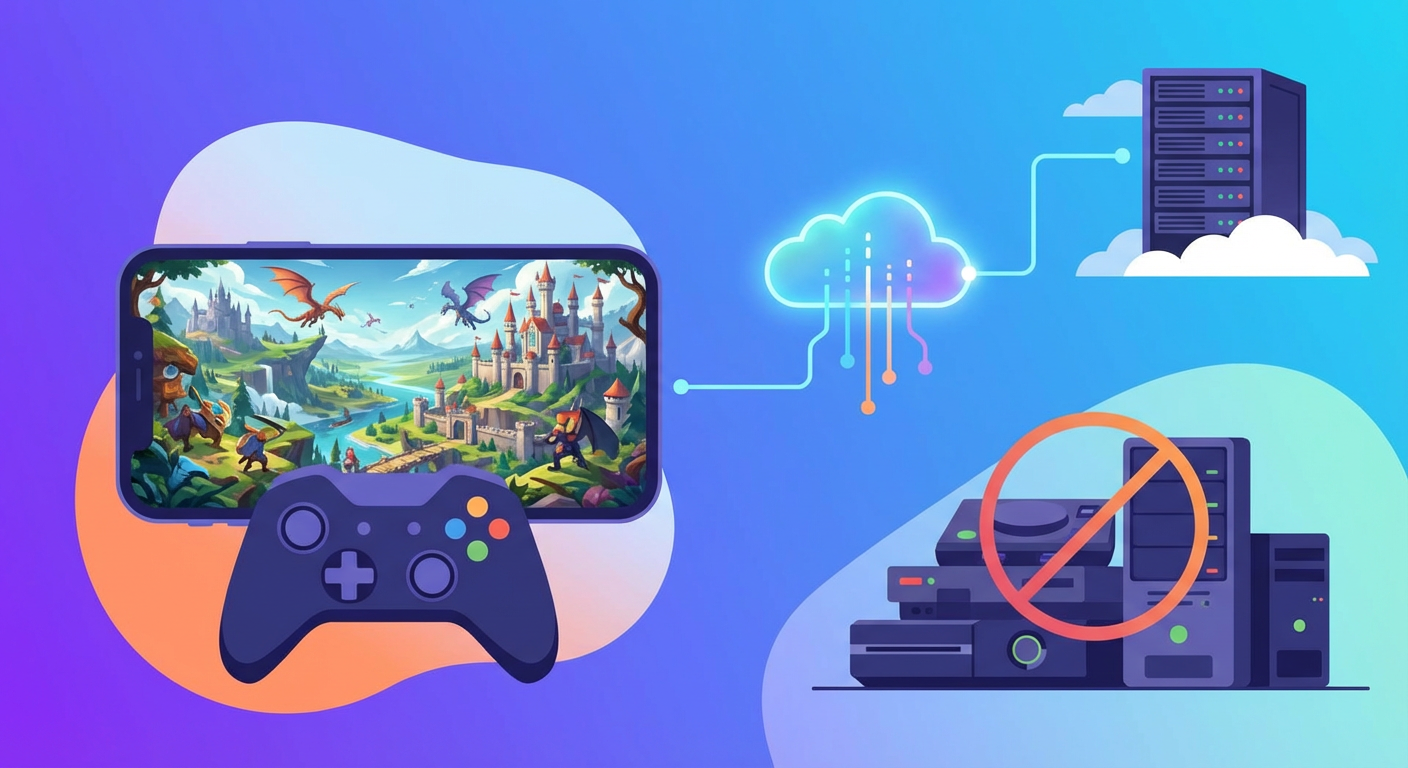
Perhaps the most transformative development in mobile gaming has been the emergence of cloud gaming services that eliminate traditional hardware limitations. Players can now access console-quality AAA titles on their smartphones without requiring powerful processors or extensive storage space. This technological shift is a fundamental change in what mobile gaming can offer, moving beyond simple puzzle games and casual experiences toward full-featured entertainment comparable to traditional gaming platforms.
Cloud gaming’s impact extends beyond individual game quality to reshape entire market segments. Flagship smartphones now include dedicated gaming features and controller support as standard offerings, acknowledging that mobile gaming has evolved far beyond touch-only experiences. These hardware improvements create positive feedback loops, encouraging more sophisticated game development while providing better experiences for existing titles.
The technology also addresses one of mobile gaming’s persistent challenges: the vast differences in device capabilities across the global market. Cloud gaming allows developers to create single versions of games that can deliver consistent experiences regardless of local hardware limitations. This standardization reduces development costs while expanding potential audiences, particularly in emerging markets where high-end smartphones remain expensive.
Global Expansion and Cross-Platform Integration
Mobile gaming’s growth story increasingly centers on international expansion, with Southeast Asia and Latin America leading global growth rates. These regions combine large populations, improving internet infrastructure, and rising smartphone penetration with cultures that readily embrace mobile-first entertainment. Local developers in these markets have also begun creating content specifically designed for regional preferences, moving beyond simple translations of Western games.
The regional growth patterns reveal important insights about mobile gaming’s future trajectory. Success in these emerging markets requires understanding local payment preferences, cultural gaming habits, and technology adoption patterns. App Annie mobile insights demonstrate that effective localization goes far beyond language translation, requiring fundamental changes to game mechanics, monetization approaches, and social features.
Meanwhile, cross-platform play has evolved from an experimental feature to an expected standard across major mobile titles. Players increasingly demand the ability to compete and collaborate with friends regardless of their chosen gaming platform. This expectation has forced developers to invest heavily in cross-platform infrastructure while creating new opportunities for player retention and engagement across multiple devices.
What’s Next for Mobile Gaming
Current trends suggest mobile gaming will continue expanding beyond its current boundaries while maintaining the accessibility that drove its initial success. The integration of advanced features like haptic feedback, augmented reality capabilities, and AI-driven personalization promises to enhance mobile gaming experiences without requiring the technical expertise that traditionally limited gaming accessibility.
The industry’s evolution also points toward increased competition with traditional entertainment formats. As mobile games incorporate higher production values, longer narrative experiences, and more sophisticated social features, they directly compete with streaming video, social media, and other digital entertainment options for consumer attention and spending.
Success in this changing environment will likely depend on developers’ ability to balance innovation with accessibility, creating experiences that can satisfy both casual players seeking quick entertainment and dedicated gamers wanting deeper engagement. The companies that master this balance while navigating platform economics and global expansion challenges will define mobile gaming’s next phase of growth and cultural influence.
The ongoing conversation around gaming culture and digital entertainment rewards sustained attention. metatrend.app is where that conversation happens with rigor.
Understanding the mechanism matters as much as knowing the outcome. Follow the full thread for sourced breakdowns.