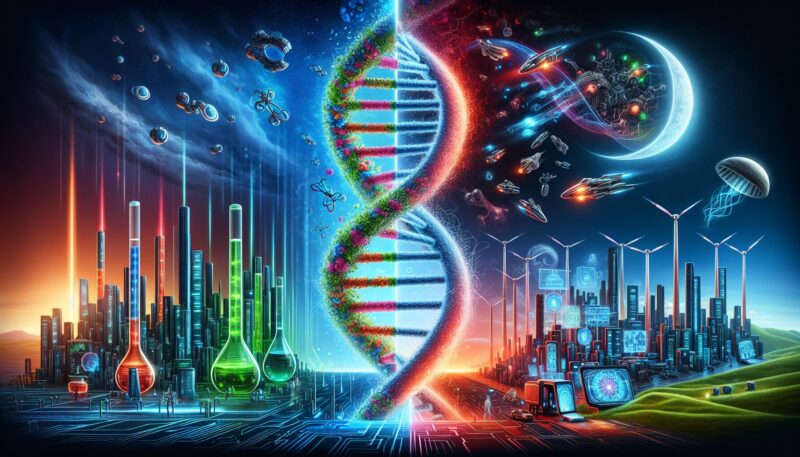
Hey, tech enthusiasts! Gather around because today we’re diving into synthetic biology. You might have heard whispers of it, or maybe you’ve seen some wild sci-fi movies where DNA manipulation goes haywire. But our reality is far more promising than dystopian fiction. We’re looking at a future where life itself can be designed with precision and creativity, thanks to this growing field that’s changing everything.
What the Heck is Synthetic Biology?
Let’s start with the basics. Synthetic biology is like playing with LEGO bricks, but instead of plastic blocks, we’re talking about the fabric of life—DNA. It’s about engineering organisms to carry out specific functions, whether it’s to produce medicines, create biodegradable materials, or even tackle climate change. Incredible, right? Who would have thought we’d come to a point where DNA could be as programmable as your everyday gadget?
Imagine having the recipe to brew your own insulin via yeast cells or tailor bacteria to break down pollutants in the ocean. Synthetic biology is all about harnessing nature’s code to solve real-world problems, and trust me, it’s as cool as it sounds!
The Current State of Play
Now, onto the juicy bits—what’s happening in the world of synthetic biology right now? For one, startups like Ginkgo Bioworks and Zymergen are on the frontline, creating a kind of microbe-based alchemy. Ginkgo Bioworks, for instance, is a Massachusetts-based company that’s pioneering the concept of biofacturing—manufacturing products through bioengineered organisms. It’s like magic meets science, and it’s already shaking up traditional industries.
But wait, there’s more! The pandemic pushed synthetic biology into the spotlight, particularly in medicine. Moderna and BioNTech used synthetic biology principles to quickly develop their mRNA COVID-19 vaccines. They reprogrammed tiny snippets of genetic code to teach our bodies how to fend off the virus. It’s like giving our immune systems a supercharged crash course.
The Bright (and Occasionally Creepy) Future
If we look a bit further down the road, the possibilities multiply faster than fruit flies. On our to-do list for the future: lab-grown meat, crop plants that thrive without pesticides, and even bacteria that can clean up oil spills. Synthetic biology could address some of our planet’s most pressing challenges.
But full transparency here—it’s not all rainbows and butterflies. Like with any innovation, there are concerns, mainly around ethics and safety. Some worry about ‘designer’ organisms escaping into the wild, or ‘biohackers’ using the tech for nefarious means. It’s like getting a new iPhone but realizing someone could weaponize iOS. We need regulatory frameworks to keep pace and ensure that what’s good doesn’t go bad.
Personal Musings from a Science Lover
When I first started exploring synthetic biology, I couldn’t help but think about playing god with DNA. But the more I learned about it, the more I realized it’s less about playing god and more about understanding the language of life. Just like learning a new programming language, it’s meticulous, requires creativity, and comes with debugging practices. It’s science fiction turned nonfiction, offering a vision less about domination and more about working with our environment.
The idea that in just a few decades, a discipline that once seemed fringe could pave the way for massive advancements in health and sustainability is mind-blowing. Think about it—we’ve gone from Stone Age innovation to potentially re-engineering life itself. That’s progress!
Conclusion
Synthetic biology is one of those fields where optimism is needed hand-in-hand with caution. While it’s thrilling to witness this frontier technology unfold, we need to shape its path responsibly. The revolution in how we understand and use the very threads of life is inspiring.
So, as we stand at this crossroads of potential, it’s not just about watching and waiting. Whether you’re a fan of tech, an industry pro, or someone who just followed a curious link, the impacts of synthetic biology will ripple into our everyday lives—so stay tuned and stay informed. Here’s to an innovative, and hopefully very healthy, future!